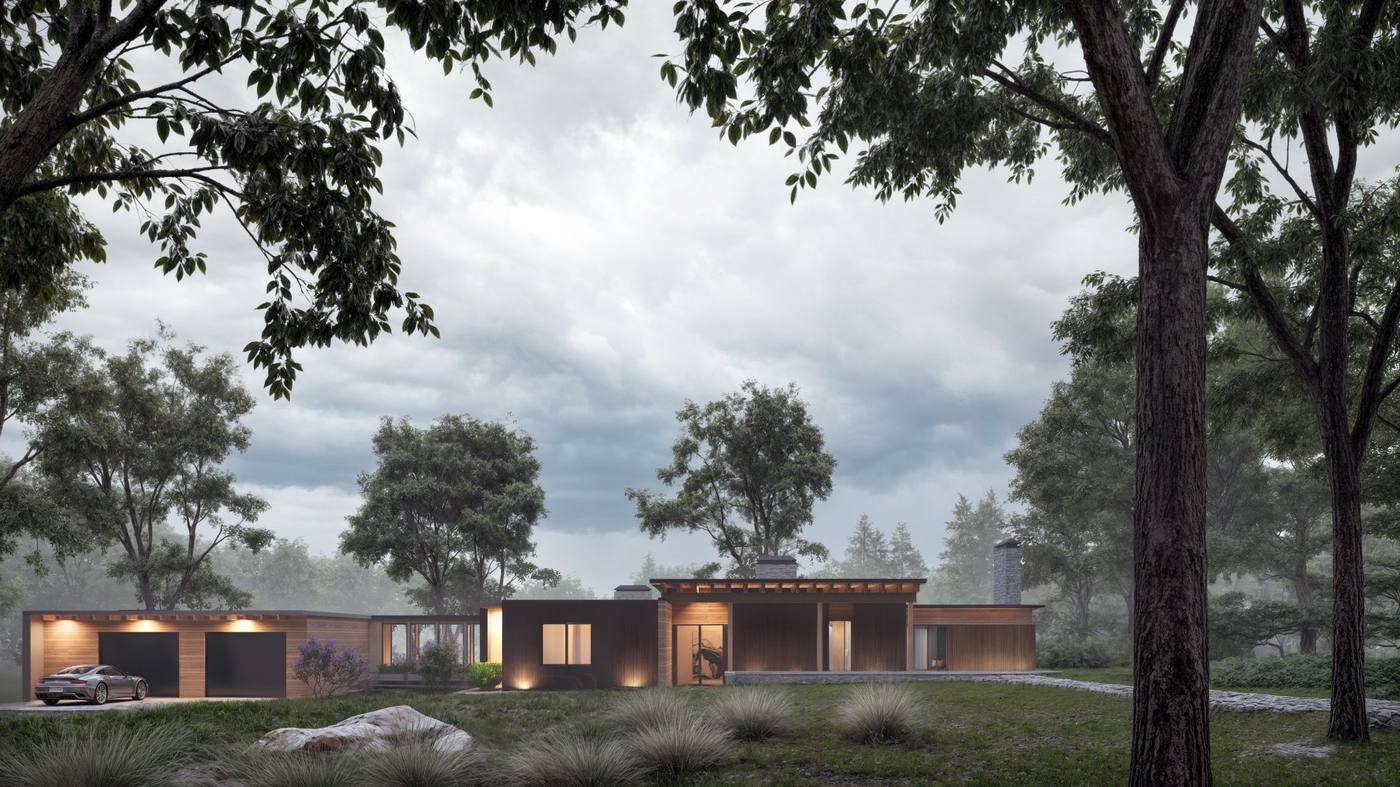

Case Study
Hearth Home
Where Tradition Meets Modern Living
Case Study
Where Tradition Meets Modern Living
The Challenge
A couple spent their entire careers working in Alaska. As retirement approached, they faced a unique challenge: how do you build your forever home on a piece of land you have owned for years, when you are thousands of miles away?
Their vision was clear: a thoughtful, efficient, minimalistic home that served all their purposes without being overdone. They wanted simplicity so they could embrace the lifestyle they loved. Root cellars, pottery, canning, and connecting with nature was all front of mind.
But they needed more than just an architect. They needed an advocate who could guide them through an unfamiliar process, make decisions in their absence, and ensure their retirement dream did not become a costly mistake.
“They needed somebody that was thousands of miles away to act on their behalf and be their advocate, because they could only come here twice a year.”
— Jacob Wimsatt, Principal Architect
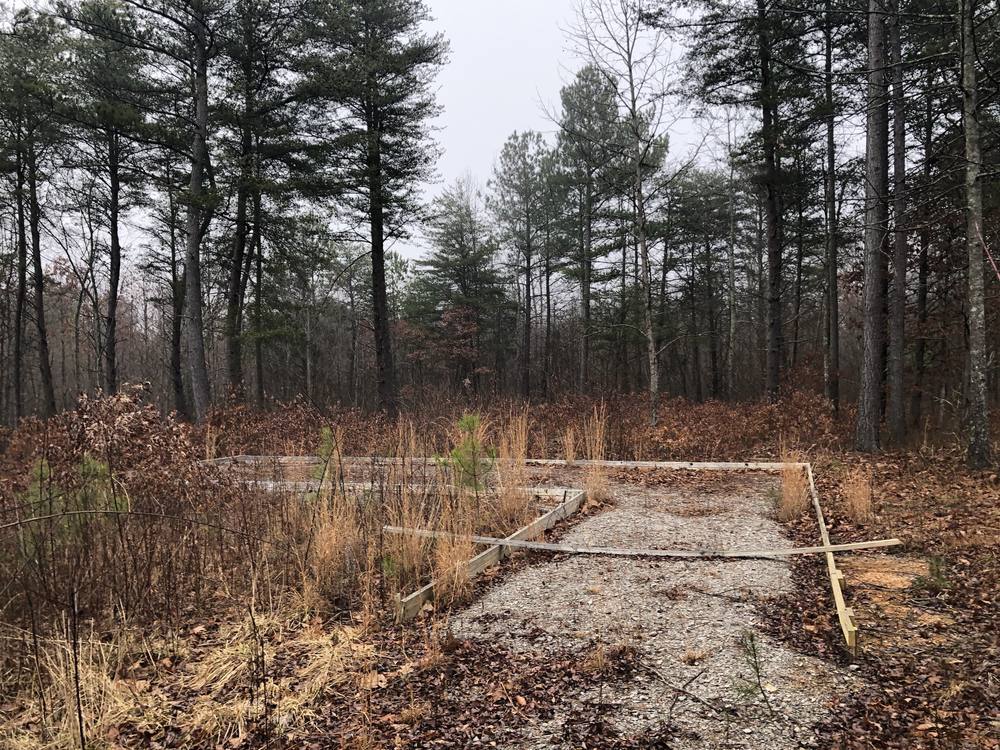
The 15-acre property at the edge of forest and meadow in Monteagle, Tennessee.
The CW Process
At CW Architects, every project begins with Pre-Design—a strategic phase that addresses three fundamental questions before a single line is drawn.
Site Analysis & Strategic Planning
The 15-acre property sat at the edge of a forest and meadow;relatively flat with few typical constraints. The real challenge? A rumored development adjacent to the property that could bring multi-unit apartments, noise, and loss of privacy.
For clients deeply connected to nature and seeking tranquility, this potential disruption was unacceptable. Strategic site positioning became the first layer of defense: rotating the house orientation to minimize visual exposure, positioning solid volumes on the meadow side as a privacy buffer, opening living spaces toward the wooded area for natural screening, and shifting the entire structure closer to the forest.
“We decided to put the shop and the more solid elements of the house on the side where that development was potentially going to go, and then shift the house on the property closer to a wooded area.”
Rightsizing for Retirement
The couple was not looking for a mansion, they wanted a home that served their needs precisely. The program evolved through collaboration to include an owner's suite with privacy from guests, a guest bedroom and office for visiting family, a central gathering space for connection, direct garage-to-pantry access for practical aging-in-place design, outdoor spaces integrated with indoor living, and a mudroom and laundry positioned for everyday convenience.
The result? A home that does not just house them. It supports how they want to live in retirement.
Value Through Intentional Design
One of the couple's primary concerns was cost of the ongoing maintenance of their forever home. Pre-Design addressed this through strategic material selection: native Tennessee materials to reduce transportation costs, a pod-based layout for efficient HVAC zoning, strategic window placement to maximize natural light and reduce energy costs, and a phased approach with the detached shop serving as temporary living quarters.
By identifying these decisions early, the Pre-Design process helped the clients understand not just what things cost, but why certain investments would pay dividends over decades.
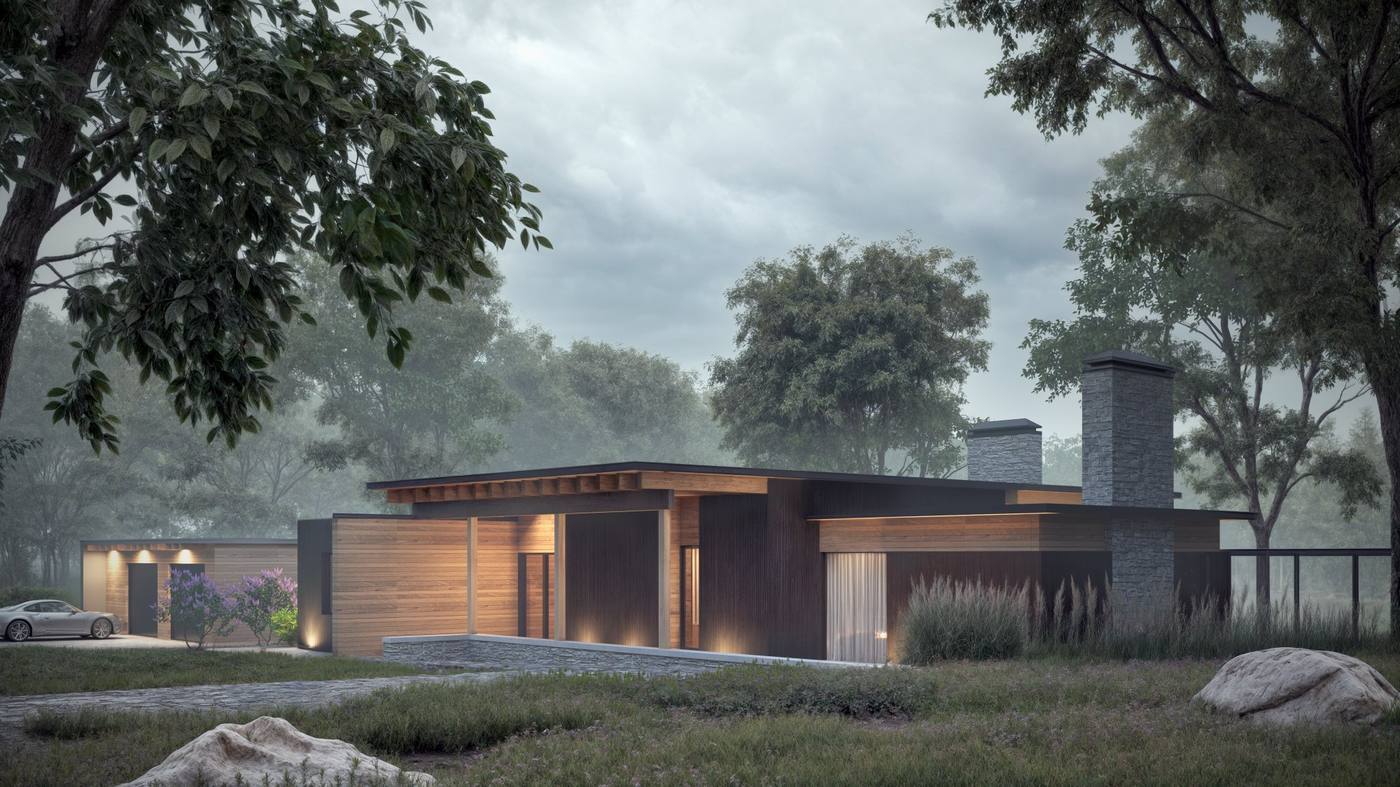
The Design Concept
Every decision in the Hearth Home flows from a single, powerful concept: the evolution of gathering spaces from prehistoric campfire to modern kitchen island.
Imagine prehistoric humans at the edge of a forest, clearing a space in the meadow and encircling stones to contain fire. Around this fire, they found warmth, prepared food, shared stories, and built language itself. The fire became the hearth—the heart of home.
Fast forward thousands of years: rooms now encircle a fireplace. Today, that gathering place has evolved again. The kitchen island is the modern hearth. It is where Sunday morning coffee happens, where homework spreads out during dinner prep, where birthday candles are blown out. It is the stage for the stories and bonds that make a house a home.
This concept drove every design decision in Hearth Home.
Design Execution
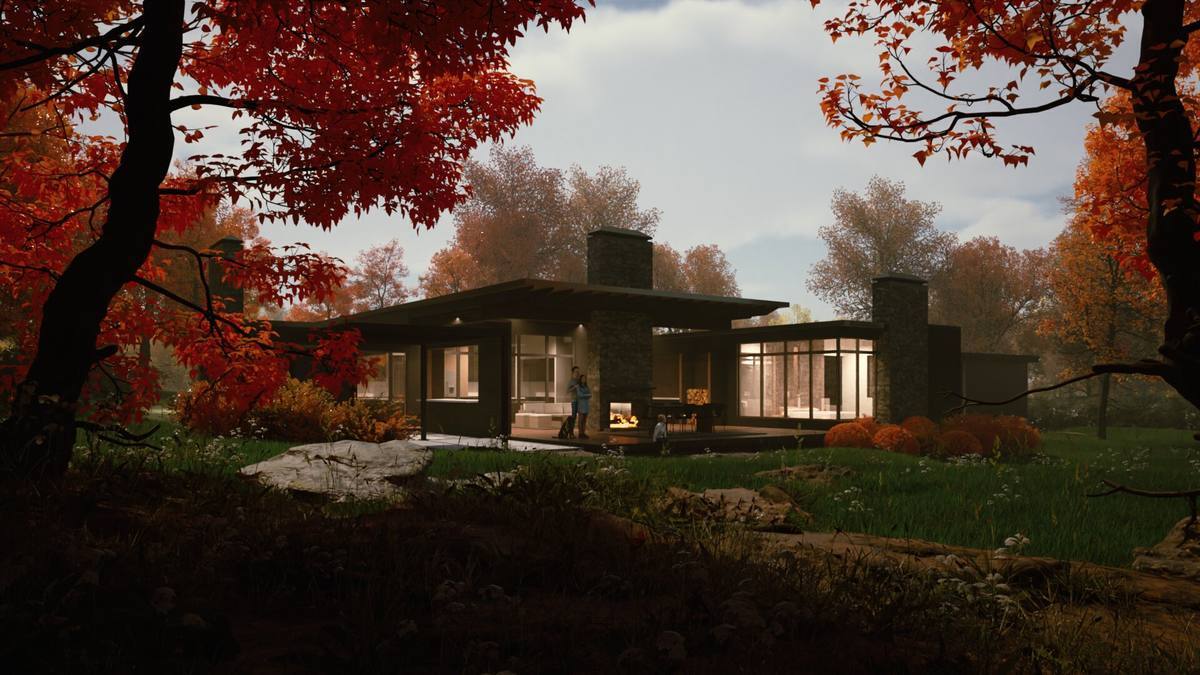
Inspired by tents encircling a campfire, the home is organized into three distinct pods, each with a specific function. The negative space between pods creates separate entries and allows superior internal functionality.
“These spaces are arranged around the hearth, much like tents around the fire. The negative space between the pods works similarly to the spaces between the tents, creating separate entries.”
— Jacob Wimsatt
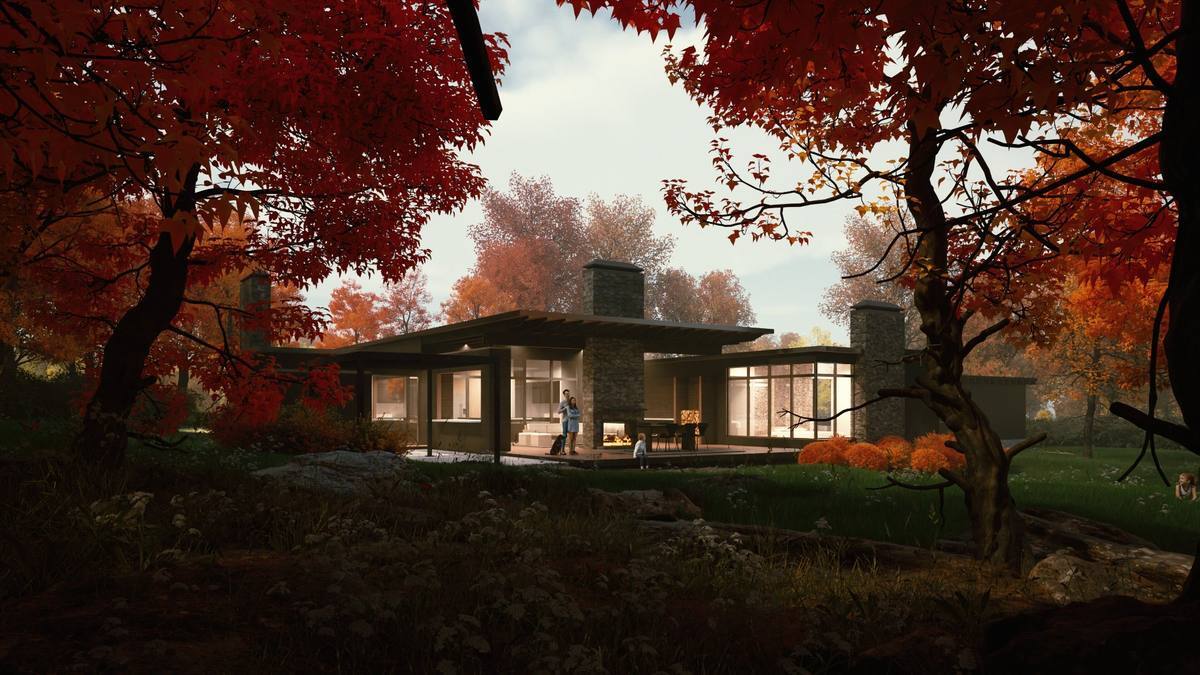
Materials
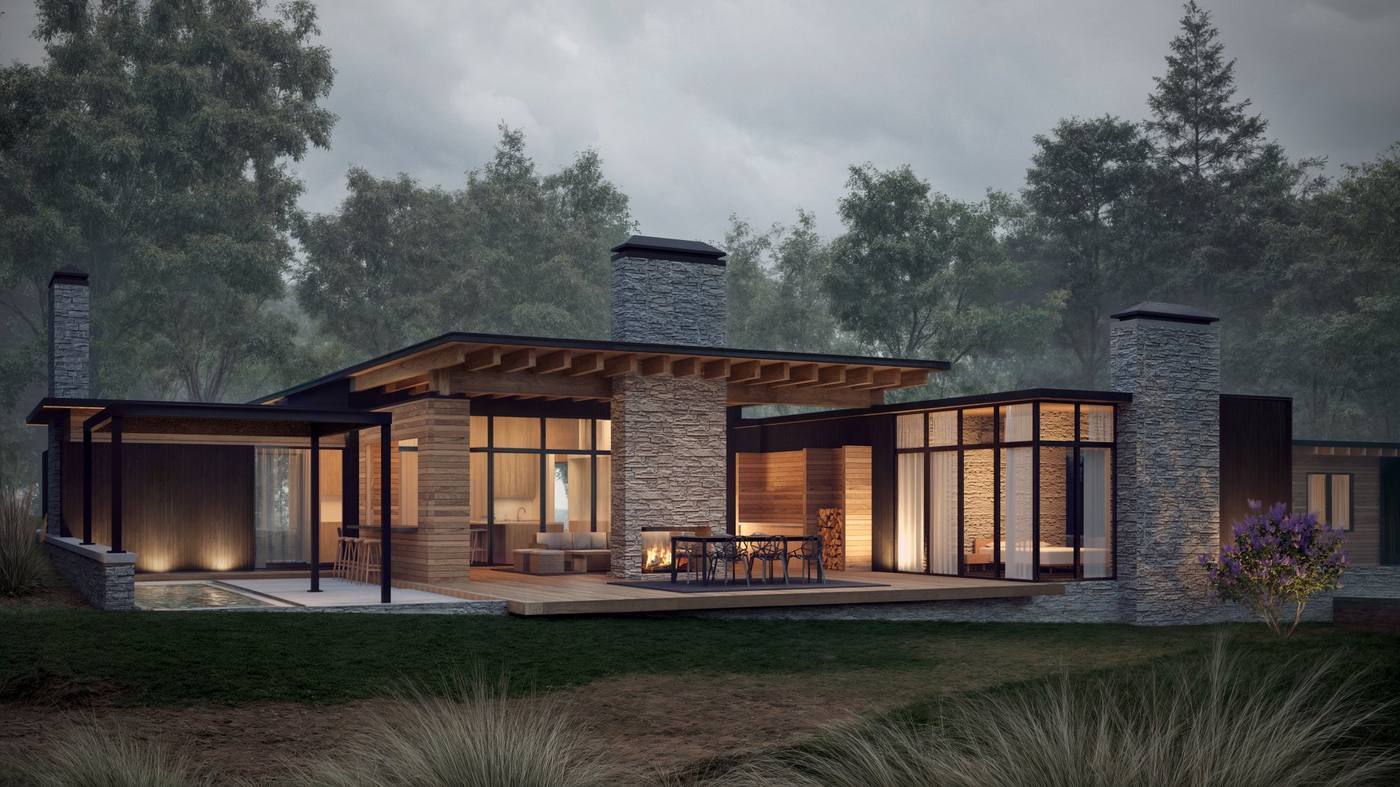
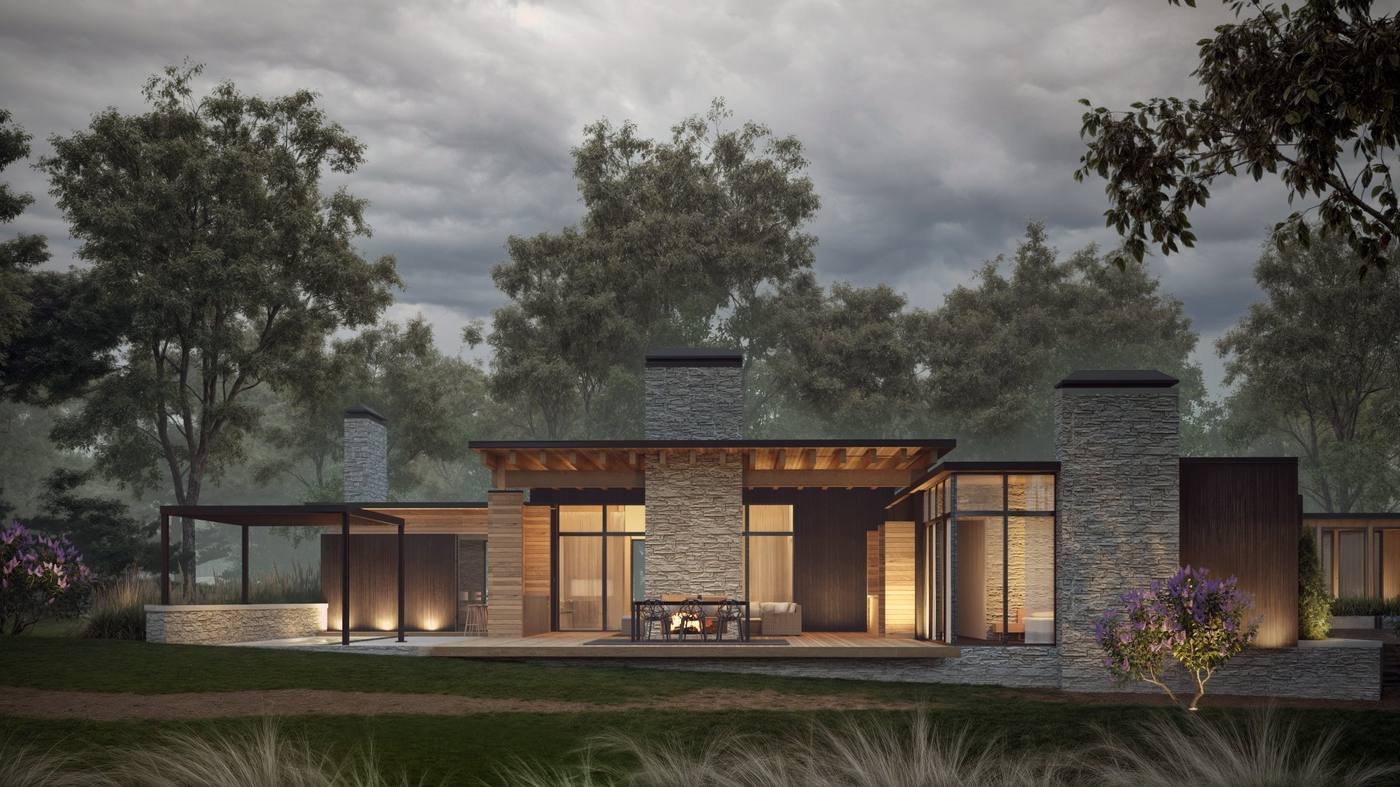
Every material selection reinforces the concept while serving practical needs. The combination creates what CW calls “Warm Modern: Contemporary design that feels inviting, rooted in place, and connected to human experience.
Native Tennessee wood connects architecture to place. The Japanese charring technique symbolizes the ancient hearth fire while providing increased bug and fire resistance with dramatically reduced maintenance. These details are critical for aging in place.
References the rocks encircling the prehistoric campfire. Defines the edge where nature converts to man-made, grounding the structure in its landscape with durable, timeless material requiring minimal upkeep.
Warm wood tones throughout and a natural stone fireplace feature create an inviting atmosphere that bridges contemporary design with organic warmth.
The Process
Making this project successful required more than good design. It required a collaborative process adapted for remote clients. Regular virtual meetings, detailed digital presentations with 3D models and renderings, on-site representation during critical milestones, and transparent communication about costs, timelines, and trade-offs ensured the Alaska-based couple was always part of every decision.
“A lot of our clients want to have a pretty heavy hand in the design, and we open our doors. We create a very collaborative environment and it’s not a black box. It’s more about collaborating, working through things.”
— Jacob Wimsatt
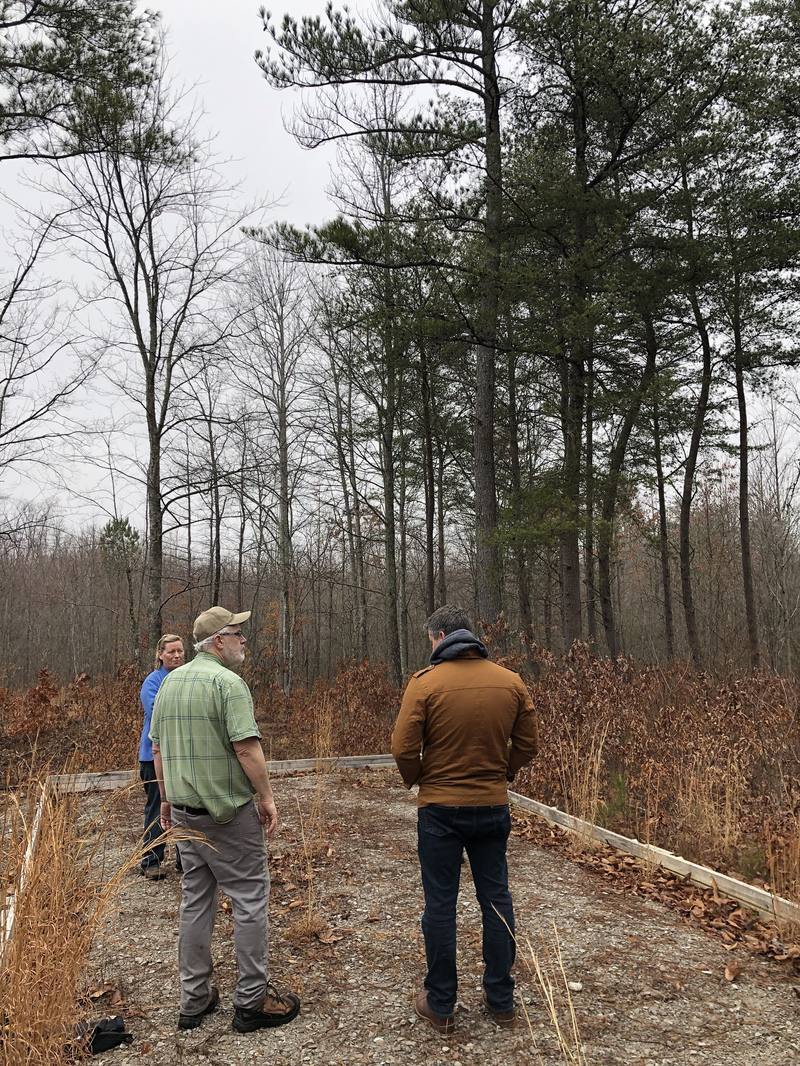
Jacob Wimsatt and the clients walk the property during a site visit in Monteagle.
Lessons Learned
Addressing site constraints, program requirements, and budget alignment before design begins saves time, money, and heartache.
When every decision flows from a central idea, you get a home that feels intentional rather than a collection of random choices.
Strategic positioning on the land can solve privacy challenges, frame views, and connect your home to its environment.
Warm Modern architecture combines contemporary efficiency with natural materials, timeless concepts, and human-centered design.
With the right architect acting as your advocate, distance does not have to compromise the quality or personalization of your project.
Whether you are building in Tennessee or managing a project from afar, CW Architects brings strategic thinking and architectural poetry to every project.